Ideogram 4 Generator: AI Images Where the Text Is Actually Readable
Posters, logos, packaging, app mockups — type the headline, get artwork with the words spelled right. Choose your aspect ratio and rendering speed, with real layout control.
Your first image is free, no account required.
No image generated yet
What is Ideogram 4 — and why do designers reach for it first?
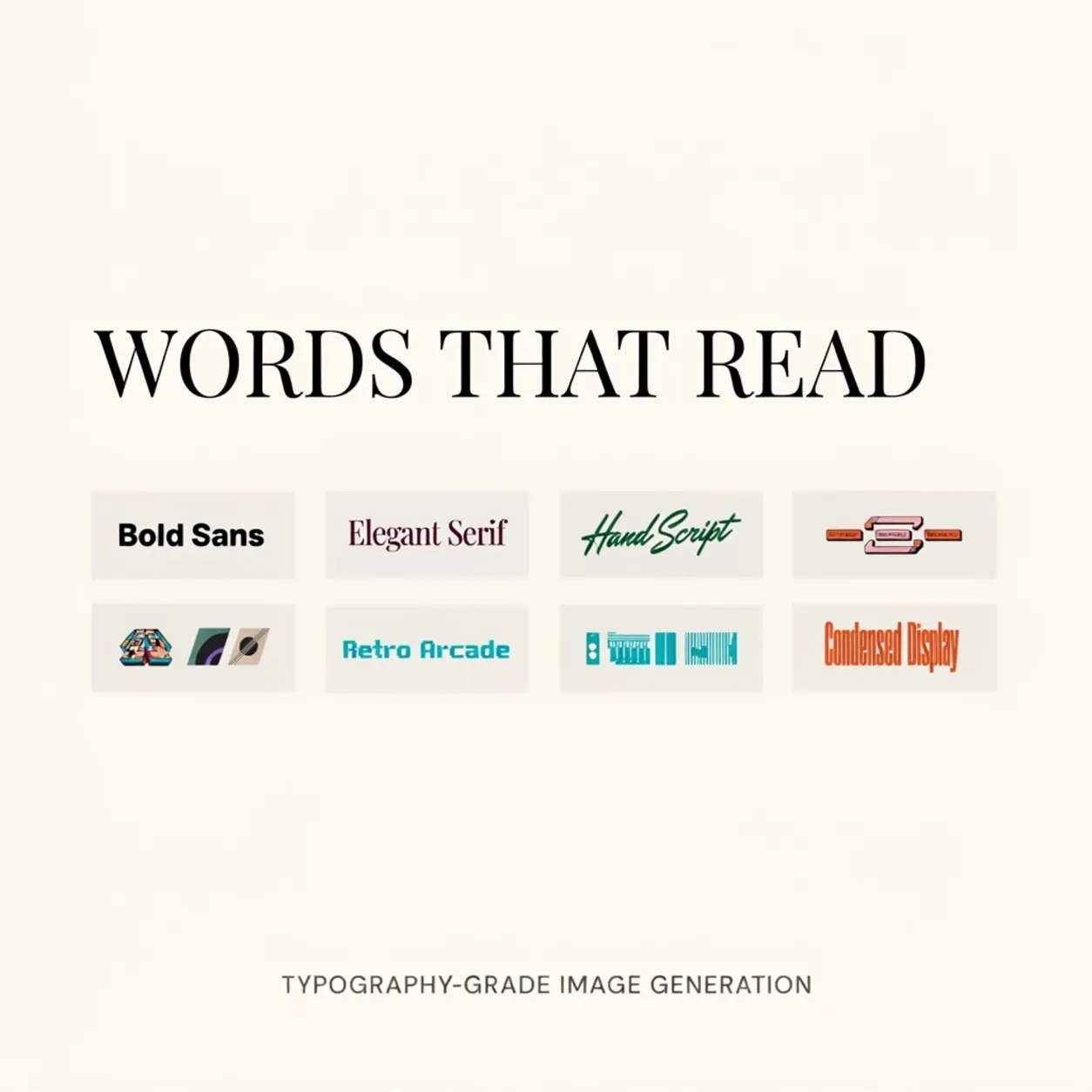
Ideogram 4.0 is an open-weight image model that shipped in early June 2026, trained from scratch with roughly 9.3 billion parameters. The thing that sets it apart isn't another photorealism leaderboard — it's that the words inside the picture come out legible. Headlines, brand names, price tags, street signs, even paragraph-length captions land with correct letterforms and tidy spacing, the place most generators still fall apart. Pair that with a choice of rendering speeds (from a fast Turbo draft to a slower Quality pass), standard aspect ratios, and unusually obedient layout control, and you get a tool built for the work designers and marketers actually ship: posters, logos, packaging, and UI mockups rather than just pretty wallpaper.
Legible Text Inside Images
Headlines, labels, and signage spell correctly with clean kerning — the reason most people switch.
Turbo to Quality Speeds
Pick a fast Turbo draft while you iterate, or a slower Quality pass when the type has to be perfect.
Open-Weight, From Scratch
A ~9.3B-parameter model trained ground-up, tuned hard for typography and graphic design.
Layout & Background Control
Strong prompt adherence — describe the composition and the model holds it, ideal for logos and layouts.
How to use Ideogram 4 — from a sentence to a finished layout
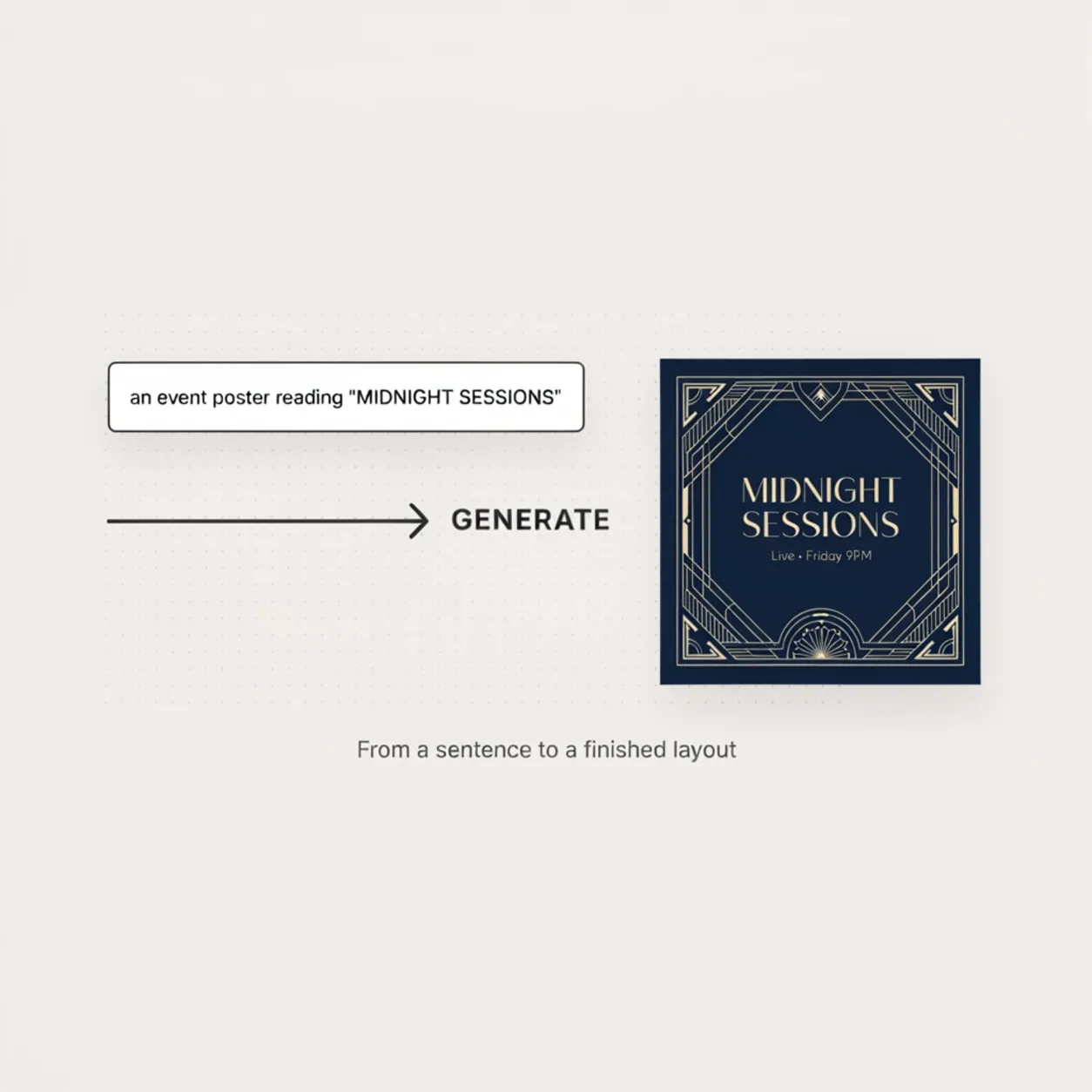
Start with the subject, then layer in the style, the lighting, the framing, and — this is the part that matters — the exact words you want printed. Wrap any headline, label, or sign in double quotes and Ideogram 4 treats it as literal copy to typeset rather than something to interpret. Pick a Turbo rendering speed when you're exploring directions quickly (8 credits), Balanced for everyday work (10 credits), or Quality when the typography has to be exact (14 credits). Because the current generator is text-to-image, the cleanest path to a polished result is a richer prompt up front: name the typeface mood, the color story, and where each line of text should sit. A few words added to the prompt usually beats a round trip through another editor.
Write the Prompt
Subject, then style and framing. Put printed copy in "double quotes" so it typesets verbatim.
Set Ratio & Speed
Ratios: 1:1, 16:9, 9:16, 4:3, 3:4. Speed: Turbo (8 cr), Balanced (10 cr), Quality (14 cr).
Generate & Iterate
Reads the prompt in seconds. Tweak the wording, re-run, and dial in the typography.
Download & Ship
Export as PNG or JPEG. No watermark on any plan.
Text That Spells Correctly — the headline feature, literally
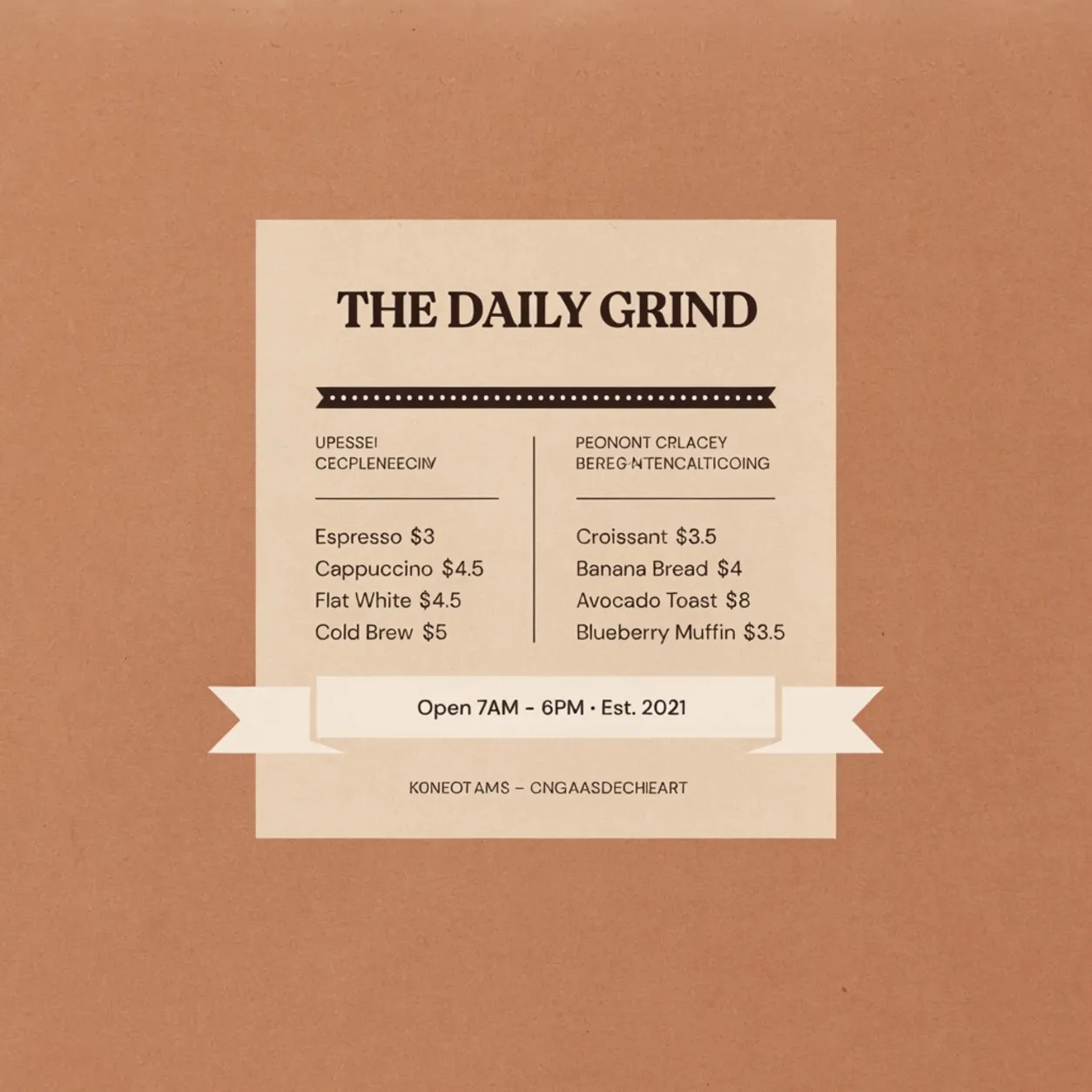
Most image models still turn a poster headline into half-invented gibberish. Ideogram 4 is built around the opposite goal: brand names, taglines, addresses, ingredient panels, and dense signage come out readable, with correct letterforms and even kerning. For anyone making posters, packaging, or ads, this is the single difference that turns an AI image from a mood board into a deliverable.
Brand names & headlines
Exact spelling, balanced kerning, no melted letters or invented characters.
Dense-text layouts
Menus, price lists, captions, ingredient panels — readable down to the small print.
Display typography
Serif, grotesk, script, blackletter — pick a type mood and the model holds it.
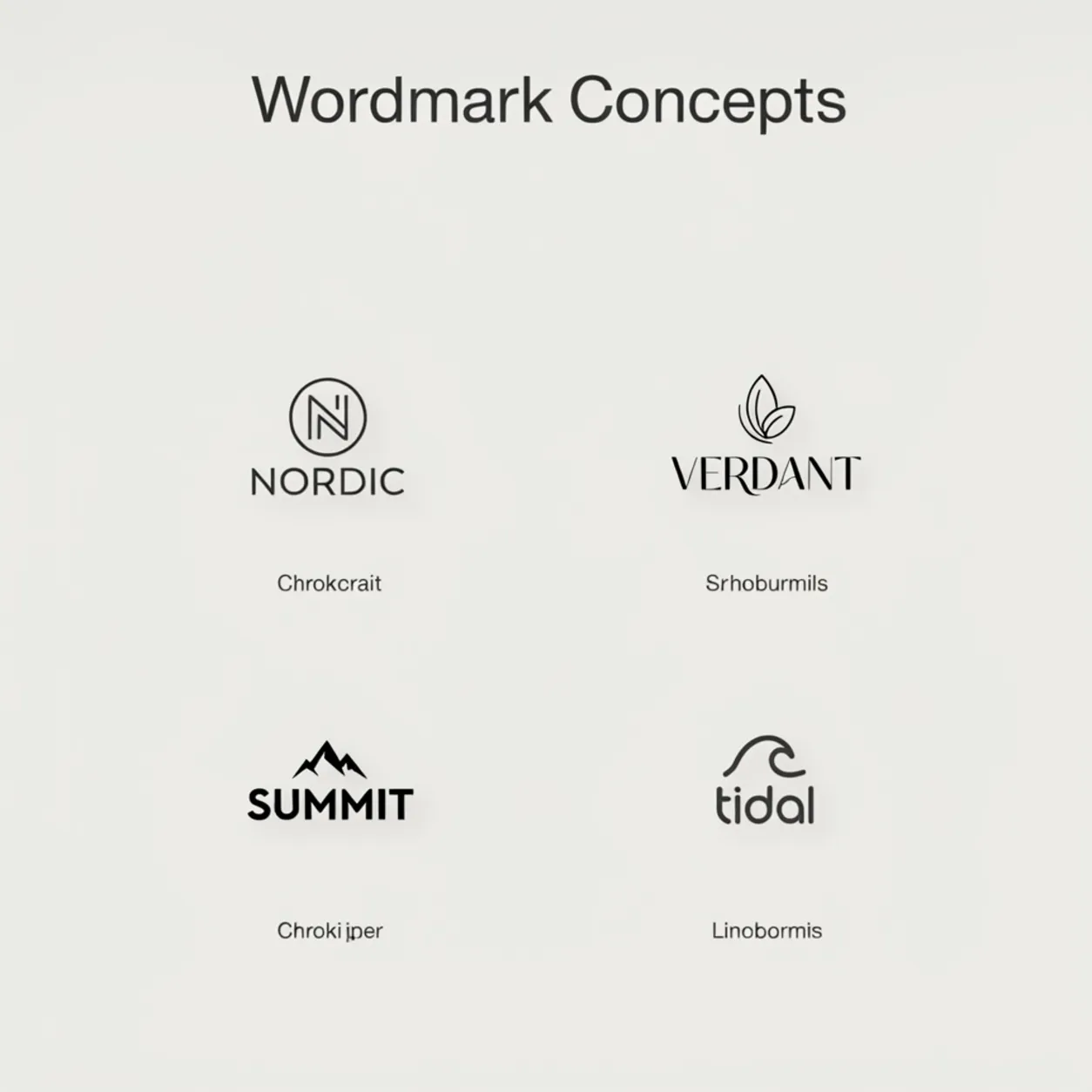
Logos & Marks — clean type-led brand artwork
Describe a wordmark and a monogram, name the color and the type feeling, and Ideogram 4 returns a logo concept where the letters read the way you wrote them. Ask for a clean flat background and the mark drops straight onto decks, packaging, and web mockups, so a single prompt can carry a brand idea from sketch to presentation without leaving the generator.
Wordmarks that read
The brand name comes back spelled right, not approximated.
Clean, flat backgrounds
Ask for a plain background and drop the mark onto a deck, tee, tote, or web hero.
Many directions fast
Re-prompt for a fresh take and compare type moods side by side.
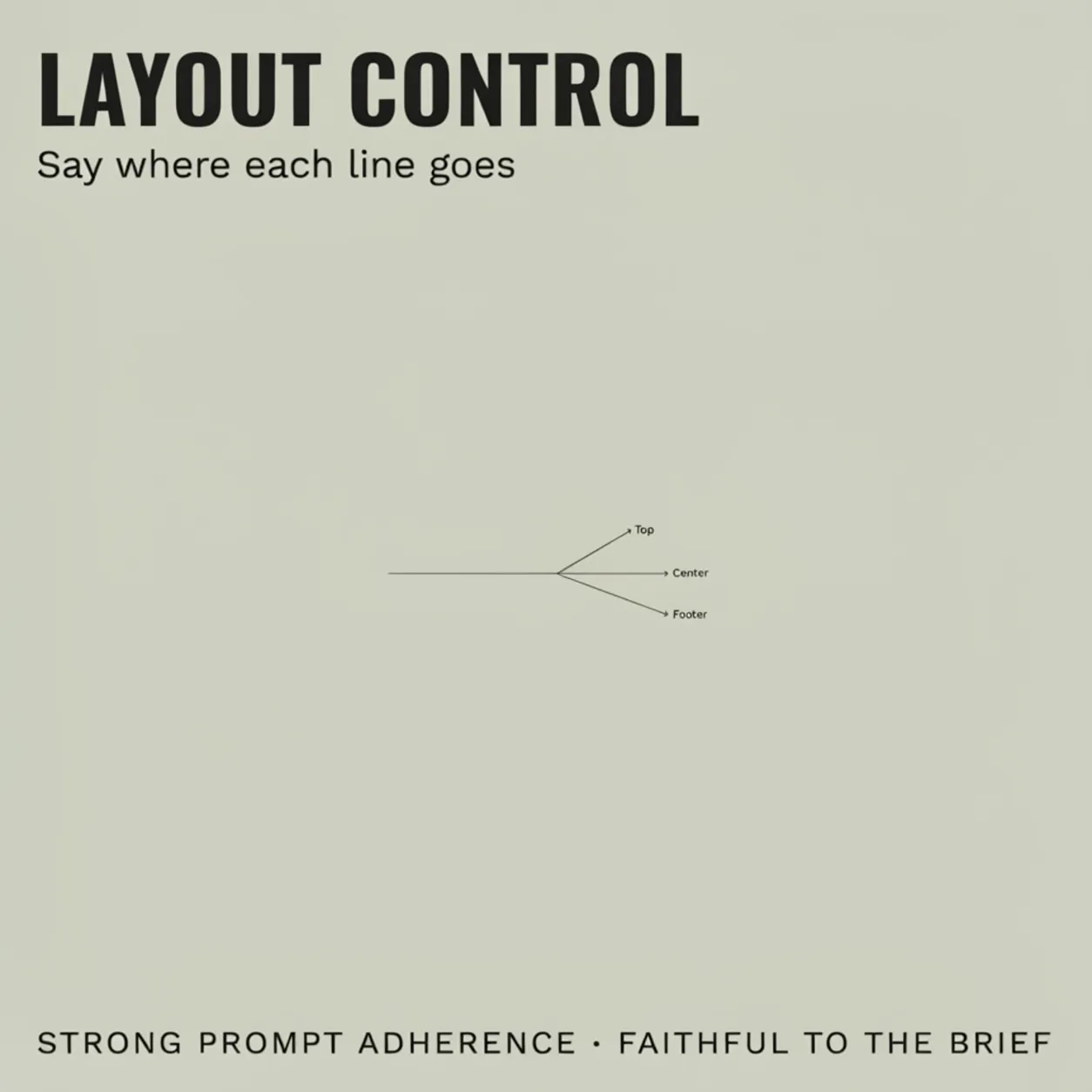
Layout Control — say where each line goes
Tell Ideogram 4 to stack the headline top-left, drop a subhead beneath it, and tuck a footer line in small caps along the bottom, and it places them where you asked. Strong prompt adherence means the composition follows your direction instead of fighting it — ideal for posters, slides, social cards, and packaging where structure matters as much as style.
Place the type
Top, center, footer, margin — describe the position and it lands there.
Faithful to the brief
High prompt adherence keeps the layout close to what you wrote.
Composition variety
Grids, hero shots, 2x2 panels, full-bleed — describe the structure you need.
Words in More Than One Language — and they still read
Typography-first training shows up across scripts, not just English. Ask for a Japanese tagline on a soda can, a Chinese cover line on a lifestyle card, or an accented French headline, and Ideogram 4 keeps the characters correct instead of melting them into decorative noise. Quote the exact phrase you want — in whatever language — and it gets typeset the way you wrote it, which is what makes the model genuinely useful for global packaging, posters, and social art.
Multiple scripts
Latin, CJK, and accented characters render with correct letterforms when you quote them.
Quote, don't translate
Paste the exact phrase you want in any language and it gets typeset verbatim.
Built for global work
Packaging, posters, and social art that ship to more than one market.
Third-Party Hosted Ideogram 4 Generator
An independent, unofficial Ideogram 4 generator that runs Ideogram 4 in your browser — powered by the Fal queue backend. Not affiliated with Ideogram.
9.3B Open-weight model, trained from scratch
Open-weight model, trained from scratch
3 Speeds Turbo, Balanced, and Quality rendering
Turbo, Balanced, and Quality rendering
Text-first Built for legible typography in images
Built for legible typography in images
Jun 2026 Ideogram 4.0 release
Ideogram 4.0 release
Straightforward Ideogram 4 Pricing — Start Free
Every Ideogram 4 plan exports watermark-free with full commercial rights. Basic for solo makers, Pro for weekly creators, Max for studios and agencies.
Pro
What's included
- 48,000 Ideogram 4 credits / year
- Up to 4,800 images / year
- Turbo, Balanced & Quality rendering
- Priority technical support
- Watermark-free exports
- Early access to new Ideogram 4 features
- Advanced batch processing
Max
What's included
- 102,000 Ideogram 4 credits / year
- Up to 10,200 images / year
- Priority generation speed
- Turbo, Balanced & Quality rendering
- Early access to new Ideogram 4 features
- VIP dedicated support
- Advanced batch processing
Basic
What's included
- 18,000 Ideogram 4 credits / year
- Up to 1,800 images / year
- Turbo & Balanced rendering
- Watermark-free exports
- Full commercial rights
- Standard support
What Creators Say About Ideogram 4
Notes from designers, founders, and marketers running Ideogram 4 for real work.
I stopped dreading headline text. I type the tagline in quotes and it comes back spelled right the first time — our campaign posters go from prompt to approval in one sitting.
Sarah Chen, Marketing Director
Sarah Chen
Marketing Director
We tested it against Flux and a couple of others. For anything with words on it, Ideogram 4 just wins — the lettering stays clean and the output is sharp enough for web and social.

Marcus Johnson, Creative Director
Marcus Johnson
Creative Director
Logo exploration used to eat a whole afternoon. Now I describe the wordmark, pull a clean PNG, and drop three directions into a deck before lunch.

Elena Rodriguez, Graphic Designer
Elena Rodriguez
Graphic Designer
For app-store screenshots and UI mockups it's a cheat code. The labels read correctly, so engineering and design actually look at the same thing.

David Kim, Product Manager
David Kim
Product Manager
It follows the brief. When I say put the headline top-left and the footer in small caps, that's where they land — the layout isn't a fight anymore.

Amara Okafor, Brand Strategist
Amara Okafor
Brand Strategist
Ideogram 4 — Frequently Asked Questions
Still stuck? Email support@ideogram-4.org.
Curious how Ideogram 4 stacks up against GPT Image 2? See the Ideogram 4 vs GPT Image 2 comparison for a full breakdown. First time here? The how to use Ideogram 4 guide covers prompts, typography direction, and rendering speeds. Track new features and model improvements on the Ideogram 4 updates log. Need a character to look the same across multiple scenes? Explore Ideogram Character. No account yet? Generate a free image with no signup. Learn who built this tool on the about page. Ready to commit to a plan? See Ideogram 4 pricing for credit packs and subscriptions.
Make Something With Ideogram 4
First image free, no signup. Full commercial rights on every tier.